REVIEW · BARCELONA
Gothic Quarter Insights & Tapas Experience
Book on Viator →Operated by Icono Spain Tours · Bookable on Viator
Gothic streets plus pintxos is a great combo. In about 2.5 hours you’ll get a smart, friendly walk through the Gothic Quarter with multilingual guides (I saw names like Ariana, Leah, Núria, and Maria in past groups), and you stay fueled with pintxos and a drink along the way. One thing to watch: it’s still a walking tour, so plan for uneven pavement and arrive on time, because the pace depends on everyone showing up.
I like that the route hits the area’s big layers fast: Roman leftovers, medieval squares, and Catalan Gothic church power. With a max of 20 people and a set start point near Plaça de la Catedral, it’s easy to jump into the old city without wrestling with logistics. If you’re expecting a sit-down museum style tour with lots of indoor time, you might want to pair it with a longer standalone stop later.
In This Review
- Key highlights you’ll feel right away
- Why this Gothic Quarter + tapas-style walk fits real travel days
- Meeting at Lamaro Hotel and working with the 3:30 pm start
- Plaça Nova: Roman roots and Joan Brossa’s letters
- Catedral de Barcelona and the New Square beside the Roman portal
- Casa de l’Ardiaca: a church residence with layers of style
- Plàça Sant Felip Neri: a tiny square with guild-history clues
- Placeta del Pi: church angles and a craft-friendly vibe
- Placa del Rei: medieval royal power in one peaceful ensemble
- MUHBA Temple d’August: the quiet Roman columns still standing
- Basilica de Santa Maria del Mar: neighborhood-built Catalan Gothic
- Carrer de Montcada: medieval civic architecture with a clear timeline
- Pintxos and a drink: what you get and what you learn
- Who should book this Gothic Quarter walking tour (and who should skip it)
- What $54.06 buys you in real travel value
- Practical notes that will make your tour smoother
- Should you book this Gothic Quarter + pintxos experience?
- FAQ
- What time does the tour start?
- How long is the experience?
- How much does it cost?
- What’s included in the price?
- Is hotel pickup included?
- How big is the group?
- What cancellation options do I have?
Key highlights you’ll feel right away
- One pintxo and one drink included, so you’re not hunting for food mid-walk
- Medieval sights with context, from Roman walls to Plaça del Rei
- A small group (max 20) that keeps the guide’s pace human
- Multilingual guide format with English offered, plus other languages on similar departures
- Photo-friendly stops that explain what you’re looking at as you walk
- Street-level Barcelona: courtyards, tiny squares, and craft-oriented lanes
Why this Gothic Quarter + tapas-style walk fits real travel days
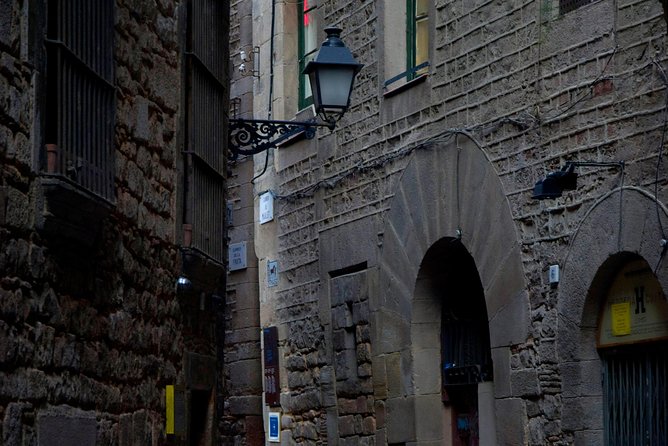
Barcelona’s Gothic Quarter can feel like a puzzle at first glance: narrow lanes, dramatic stone churches, and sudden open squares that look like they were carved into the city. This tour works because it gives you a map made of stories. You’re not just collecting landmarks; you’re learning how the places connect—Roman city planning, medieval church and royal life, and the neighborhood-built identity that still shows up in today’s streets.
The best part for most people is the timing. A 2.5-hour format is long enough to get oriented but short enough to keep the rest of your day flexible. And the included pintxo and drink give you a natural break point so the walk doesn’t turn into snack-less sightseeing.
If your goal is to understand what you’re seeing without spending hours reading plaques, this style is made for you. If you want a slow, deep museum visit with tons of indoor ticketing, then treat this as your quick education and add other stops on your own after.
You can also read our reviews of more tours and experiences in Barcelona.



Meeting at Lamaro Hotel and working with the 3:30 pm start
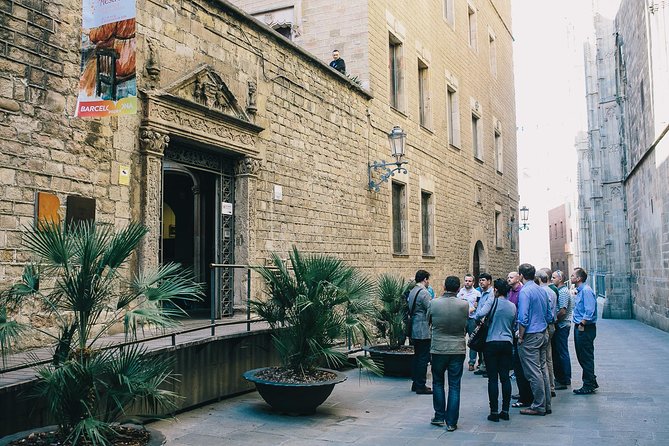
You’ll meet at Lamaro Hotel Barcelona, Av. de la Catedral 7, in Ciutat Vella, and the tour ends back at the meeting point. It starts at 3:30 pm, which is a smart time for the Gothic Quarter. Late afternoon gives you better light for photos than mid-morning, and you’re usually not fighting the earliest crowds.
The tour is also set up for easy access. It uses a mobile ticket, and it’s near public transportation, so you’re not stuck figuring out the last stretch on foot in the dark. Still, come ready to walk. Even when a stop is only about 5 to 10 minutes, the total movement adds up fast in the old streets.
One practical tip: set your phone to offline maps before you go. The Gothic streets can look similar, and it saves time if you need a quick check while searching for the guide.
Plaça Nova: Roman roots and Joan Brossa’s letters
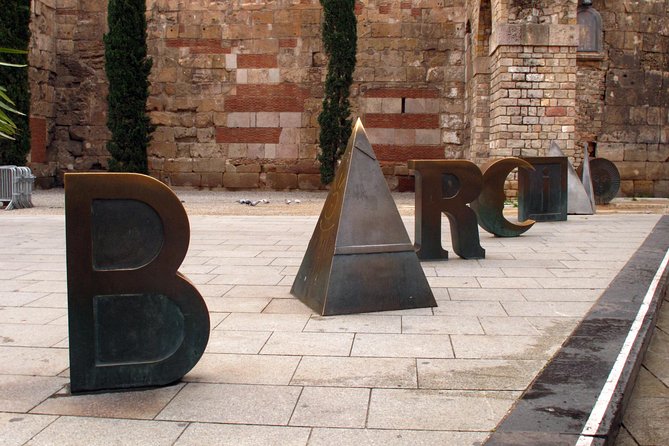
The walk begins at Plaça Nova, right where you’re close to the boundary of the former Roman city. Then comes a modern wink in the middle of medieval Barcelona: giant letters that spell Barcino, tied to artist Joan Brossa.
This stop matters because it anchors the whole tour in a clear idea: today’s Gothic Quarter isn’t only medieval. It’s built over older structure. The letters are bolted to the ground, and the tour explains the mix of materials too—some in bronze and one in aluminium—so you understand this isn’t random street art. It’s a visual bridge between eras.
If you love Barcelona’s blend of old and new, this is a great opener. It also gives you something easy to photograph without needing to stand in a queue.
Catedral de Barcelona and the New Square beside the Roman portal
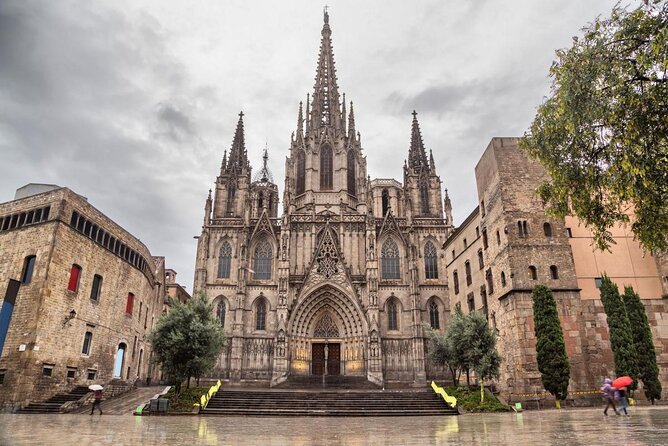
Next you’ll head to the Catedral de Barcelona area, focusing on the Palace of the Bishop and the relationship to the city walls. You’ll hear how the episcopal power took form using structures tied to the Roman-era setting.
Then there’s the New Square, created in 1355 when water was channeled from Collserola. The tour links the square to the Porta Praetoria area, commonly called the Portal del Bisbe. In plain terms: you get shown where civic and religious life overlapped with Roman architecture, even if the street layout has changed over time.
Why I like this stop: it’s the kind of explanation that helps you read the city. After hearing it, you start noticing how a church complex can act like a political map.
Casa de l’Ardiaca: a church residence with layers of style
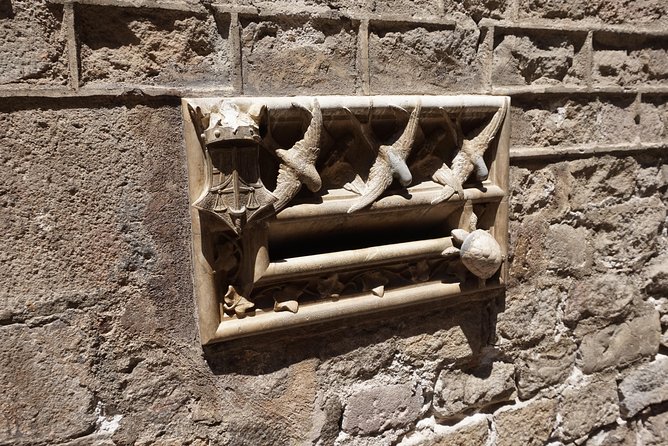
Casa de l’Ardiaca is one of those buildings that sounds dry on a map, but feels alive when someone connects the dots. You’ll learn it served as a residence for ecclesiastical hierarchy from the 12th century onward, and that it went through major alterations later.
The standout detail here is the mix of design eras. The tour points out how changes in the early 16th century connected it to the dean’s residence, plus how the porticoed central courtyard and Renaissance-style decorations appear alongside the flamboyant Gothic structure. Then you’ll see the staircase leading toward the upper terrace/balcony area that locals compare to Romeo and Juliet-style romance.
For you, this is a great pause stop because it shifts the focus from big public squares to private architectural life. The drawback? It’s brief. You’ll get a guided highlight, not a full building tour, so if you want to linger, plan to come back later on your own.




Plàça Sant Felip Neri: a tiny square with guild-history clues
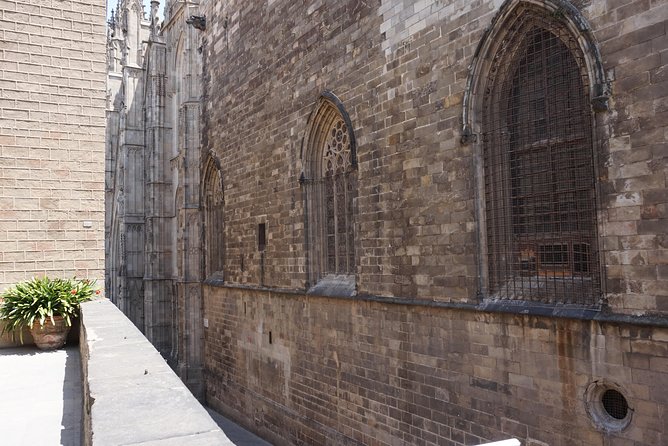
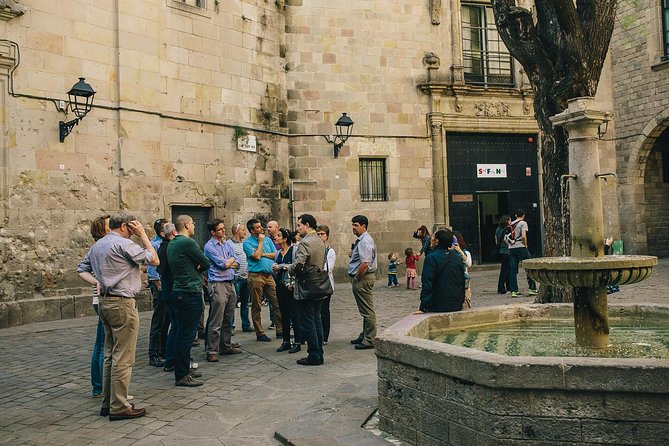
Plàça Sant Felip Neri is one of those spots where the Gothic Quarter suddenly opens up into something small and surprisingly calm. The square has a little fountain in the middle and the baroque church of Sant Felip Neri looking over the top.
What the tour adds is the human layer: buildings that once housed shoemakers’ and coppersmiths’ guilds. The guilds moved from earlier premises, and the guide ties the move to the street network that shaped everyday work life.
This stop is good if you like social history. It also helps you understand that the Gothic Quarter wasn’t only nobility and bishops. It was also workshops and trades.
If you’re prone to skimming, don’t. This is the place where the explanation makes the environment feel personal.
Placeta del Pi: church angles and a craft-friendly vibe
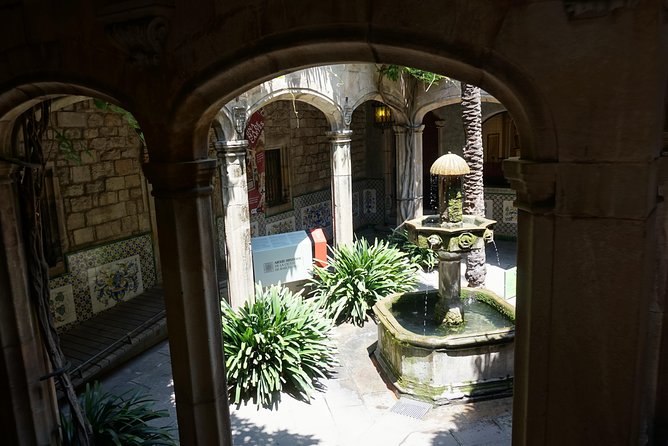
Next you’ll reach Placeta del Pi, where a Gothic basilica and two small squares create an easy-to-like corner of the neighborhood. The tour connects the space to an earlier cemetery around the 14th-century church, and you’ll see how those grounds became small squares where painters and artisans set up their work.
This stop gives you an honest sense of how parts of the Gothic Quarter function today. You get history, but you also get a hint of the ongoing creative economy that keeps the area from feeling like a dead backdrop.
The practical note: this is another quick one. If you want to shop or talk with artisans, keep a little time buffer after the tour to do it.
Placa del Rei: medieval royal power in one peaceful ensemble
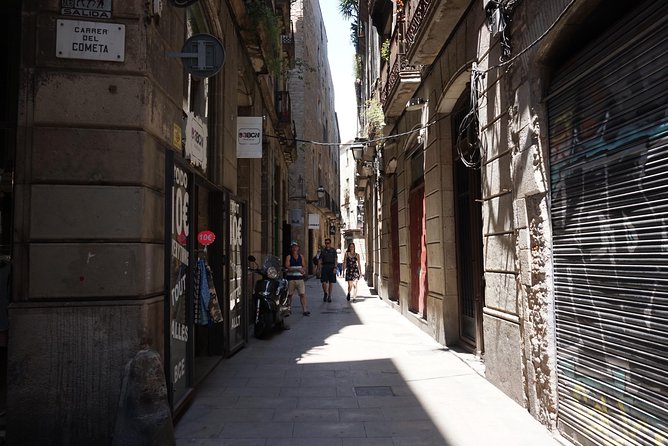
Plaça del Rei is a showpiece for medieval Barcelona: the monumental ensemble around the royal palace (Palau Reial Major) and its surrounding buildings. The guide frames it as one of the clearest architectural examples of the medieval past, and you can feel why. The layout creates a calm “stage” effect even in a crowded city.
You’ll walk away understanding that royal and civic life wasn’t tucked behind walls somewhere. It was part of the street fabric. That perspective changes how you see the rest of the quarter.
Potential drawback? Because it’s a major square, it’s also a photo magnet. If you’re trying to get unblocked pictures, you may need to wait a moment or change your angle.
MUHBA Temple d’August: the quiet Roman columns still standing
Then comes one of Barcelona’s lower-key surprises: MUHBA Temple d’August on Carrer Paradís. Inside a small medieval courtyard, you’ll find four columns from the Temple of Augustus that survived through centuries.
The guide emphasizes the age—over 2,000 years—and the fact that these columns can make the Roman layer feel real, not abstract. In a neighborhood known for medieval architecture, this stop reminds you the city’s story starts earlier than most people expect.
I like this stop because it gives your brain a reset. You’re not just watching Gothic details; you’re seeing how Roman structure endured long enough to shape what came later.
Basilica de Santa Maria del Mar: neighborhood-built Catalan Gothic
Basilica de Santa Maria del Mar is often treated as a highlight for people who care about Catalan Gothic. What makes it stand apart here is the way the tour explains it: the “real cathedral” of the Old Town because it was founded and constructed by local people from the neighborhood.
You’ll learn why that matters. When a community builds a church, it tends to look like the community that funded it—practical, intentional, and tied to local identity rather than distant authority.
You also get a sense of how the Gothic Quarter’s life revolved around religious and civic rhythms. This is a stop where the guide’s interpretation really helps you appreciate the architecture instead of just admiring it.
Carrer de Montcada: medieval civic architecture with a clear timeline
The final stretch is Carrer de Montcada, today famous for medieval civic buildings. The guide gives you an actual route inside the walk: it begins with the Romanesque Marcus chapel (12th century) and ends around Plaça del Born.
You’ll also learn how the street used to function as one single stretch until the 19th century, when it got divided by the opening of Carrer Princesa in 1853. Then comes the family story: the Montcada name comes from the important Montcada family who received land in the 12th century linked to support for King Ramon Berenguer IV during the conquest of Majorca.
That combination—architecture plus civic timeline—turns this street from pretty scenery into something you can read like a text.
If you’re a fan of street-level history, this is a strong finish. It helps you leave with a mental map of how medieval power, wealth, and family influence played out in stone.
Pintxos and a drink: what you get and what you learn
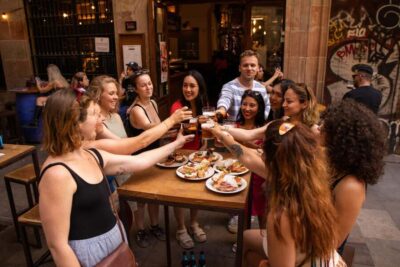
You’re given one pintxo and one drink as part of the experience. That’s a real value add, especially in a neighborhood where snack spots can be hit-or-miss if you’re tired.
More important than the food is what the guide helps you understand about the culture. One of the comments highlighted learning the difference between pintxos/pinxer culture and tapas culture. So you’re not just eating—you’re getting context for why these small bites are treated like social events rather than quick fuel.
This is also where the group feel shows up. A lot of people enjoy the chance to talk with others in the group after the walking part ends, especially if it’s your first day in Barcelona or you want an easy way to meet fellow travelers.
If you’re picky about food, check what’s offered at that stop. The tour includes food as stated, but your best bet for zero surprises is to be clear about preferences when you’re given the pintxo/drink choice.
Who should book this Gothic Quarter walking tour (and who should skip it)
This tour fits you well if:
- You want a guided orientation to Barcelona’s oldest streets in one afternoon
- You love architecture explanations tied to real-life use (churches, squares, royal spaces)
- You’d like a group setting without a long haul
- You’re hungry for history, but you don’t want a lecture
You might not love it if:
- You hate walking or your schedule doesn’t allow for uneven pavement
- You’re looking for extensive indoor museum time at each site
- You want a full, slow art-history deep dive rather than a curated route
What $54.06 buys you in real travel value
At $54.06 per person for about 2.5 hours, you’re paying for three main things: a professional guide, structured time in a dense area, and food. The guide component is the big one. In places like the Gothic Quarter, the difference between looking at a building and understanding it can be night-and-day.
The included pintxo and drink help reduce decision fatigue. Instead of spending your limited energy searching for something that fits, you get a built-in payoff after the sights.
Also, a group cap of 20 keeps the experience from turning into a rushed stampede. That matters in narrow streets, where speed can make it hard to hear your guide.
If you’re booking this as your first Gothic Quarter intro, it can actually save time later. You’ll know what areas deserve a second pass once you’ve learned the basics.
Practical notes that will make your tour smoother
Wear comfortable shoes. The route is mostly street-level, and the Gothic Quarter’s pavement isn’t always flat.
Arrive a little early. One past participant had trouble when they were late for their language group, and it affected whether the guide waited.
Bring a fully charged phone if you’re using the mobile ticket. It’s included, and it’s easier if you’re ready to show it quickly.
Service animals are allowed, and near public transport makes it simpler to connect from the rest of your Barcelona plan.
Should you book this Gothic Quarter + pintxos experience?
I’d book it if you want a compact way to understand the Gothic Quarter’s layers and get a snack with built-in context. The route hits major medieval anchors—Roman references at Plaça Nova, civic power at Plaça del Rei, community-built church identity at Santa Maria del Mar, plus the Roman columns at MUHBA Temple d’August—so you leave with a clearer mental map.
I wouldn’t book it if you want mostly indoor time or a super long, slow pace. This tour is built for walking, stopping, learning, and then eating together.
If your schedule can fit a 3:30 pm start, it’s a very workable way to turn an afternoon into something meaningful.
FAQ
What time does the tour start?
It starts at 3:30 pm.
How long is the experience?
It runs about 2 hours 30 minutes.
How much does it cost?
The price is $54.06 per person.
What’s included in the price?
You get one pintxo and one drink, plus a professional guide.
Is hotel pickup included?
No. Hotel pickup and drop-off are not included.
How big is the group?
The tour has a maximum of 20 travelers.
What cancellation options do I have?
You can cancel for a full refund up to 24 hours before the experience’s start time.