One pan, real technique, and you leave full. This paella cooking class in Barcelona’s Gràcia neighborhood is built around a hands-on open kitchen with a laid-back vibe, and I love that the small group format keeps things personal. I also like that you’re not just tasting a meal: you cook tapas and a traditional seafood paella, then sit down together like it’s your own dinner table. One thing to consider: it’s a 7:00 pm, 2-hour session, so if you’re chasing a late-night schedule, plan your day accordingly.
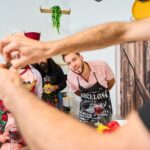
In the kitchen, the energy is casual, not stiff. You work as the chef talks you through steps, and the group builds the meal together while you enjoy an open bar of sangría. My only heads-up is that the experience is listed in English, so if you’re looking for a class purely in Spanish/Catalan, this may not be the best fit.
In This Review
- Key things I’d mark on your map
- Gràcia’s Open-Kitchen Setup: Where the Evening Starts
- Small-Group Learning: You Cook, You Ask, You Get Corrections
- Catalan Tapas Course: The Menu You’ll Actually Remember
- Traditional Seafood Paella: The Technique You Can Repeat
- Tapas, Paella, and Bottomless Sangría: The Night’s Energy
- Price and Value: What $81.71 Buys You in Barcelona
- Timing, Location, and How to Plan Your Evening
- Who This Class Is Best For (and Who Might Want Another Option)
- Should You Book Kampada’s Paella Cooking Class in Gràcia?
- FAQ
- What’s the duration of the paella cooking class?
- Where does the class take place in Barcelona?
- Is the class offered in English?
- How many people are in the group?
- What’s included with the ticket?
- Do they provide a mobile ticket?
Key things I’d mark on your map
- Gràcia location + an open kitchen: a stylish space where you cook around the island, not in a classroom
- Max 12 people: enough structure to learn, small enough for real attention
- Bottomless sangría: an open bar while you cook, plus the local recipe concept shared
- Catalan starter lineup: fuet, pa amb tomàquet, sepia a la plancha, and mussels in marinera sauce
- Seafood paella focus: you make the rice dish you’ll want to repeat at home
- Cooks with you, not at you: the tone stays fun and collaborative with the team
Gràcia’s Open-Kitchen Setup: Where the Evening Starts
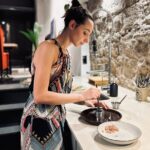
This experience takes place in Barcelona’s Gràcia neighborhood, and the setting matters more than you might think. You’ll meet at L’ExquisEat on Carrer de Santa Magdalena (Gràcia), then settle into a venue that’s described as an open kitchen around an island. That layout is great because it turns cooking into something you can actually follow. You’re not craning your neck around a cooking show set. You’re close enough to see what’s happening and close enough to ask questions.
The venue is also described as stylish and comfortable, with a cozy dining feel. Expect sofas, dining tables, good music, and an atmosphere that feels more like a fun dinner party that happens to teach you how to cook than a strict class where everyone stays quiet.
From a practical angle, this matters on a night like this. The class runs about 2 hours, starting at 7:00 pm. If you show up hungry, you’ll have the best time—because the schedule is built so you cook, taste, and then eat what you make without a long waiting game.
You can also read our reviews of more tours and experiences in Barcelona.

Small-Group Learning: You Cook, You Ask, You Get Corrections
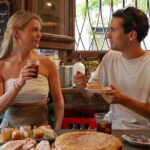
The whole point of a small group (this one caps at 12 travelers) is that your questions don’t get swallowed. You’ll cook step by step alongside the chef, and you’ll get feedback as you go. A couple of people highlighted how dynamic and collaborative the experience feels, and that’s exactly the advantage of this format. It helps you learn technique, not just memorize a recipe.
One name that comes up in the experience is Pabla, and the overall impression from what you can read is that the team keeps things friendly and responsive. You’re encouraged to chat while cooking, and that lowers the stress level. If you’ve never made paella before, that matters. If you’ve made it once and it came out bland, that matters too—because you’ll finally learn what to adjust.
Here’s the realistic takeaway: cooking classes that feel like copy-the-steps often don’t translate to your home kitchen. This one is set up to help you understand the process well enough that you can recreate the flavor later. You’ll leave with new kitchen moves, not just a full stomach.
Catalan Tapas Course: The Menu You’ll Actually Remember
The tasting part isn’t an afterthought here. The menu is part of the lesson because Catalan food teaches you flavors that pair naturally with paella: tomato, garlic, olive oil, herbs, seafood, and cured pork.
You’ll start with a couple of classic starters:
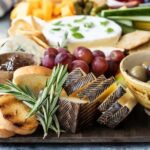
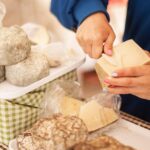
Catalan charcuterie: fuet
Fuet is a traditional cured sausage from Catalonia, seasoned with black pepper and slowly air-dried. It’s simple, salty, and great for getting your palate ready for the more aromatic seafood dishes later.
Pa amb tomàquet
This is one of those dishes that seems almost too easy—toasted bread rubbed with ripe tomato, plus olive oil and salt. The value isn’t complexity. It’s the flavor logic: ripe tomato + good bread + olive oil. When people talk about learning how to recreate tastes at home, this is the kind of anchor dish they mean.
Then you move into seafood-focused tapas:
Grilled cuttlefish with garlic and parsley sauce (sepia a la plancha-style)
You’ll get tender grilled cuttlefish, seared and served with a bold ají sauce that adds a subtle spicy kick. If you’re the kind of cook who wants seafood to taste lively, this is a great step in the menu.
Mussels in marinera sauce
Mussels gently cooked in a rich tomato, garlic, and white wine sauce. This is classic Mediterranean seafood comfort, and it also teaches you the flavor backbone: tomato + garlic + wine. That combo shows up throughout Spanish cooking for a reason.
So what makes this tapas lineup valuable? It gives you multiple “flavor templates.” When you later try to make paella at home, you can think back to how the tomato-garlic-wine style sauce tasted, and you can build around that memory.
Traditional Seafood Paella: The Technique You Can Repeat
The main event is traditional seafood paella, cooked with shellfish and fresh seafood. You’re not just watching someone else do it while you sip sangría (though you do get to enjoy sangría as you cook). You’re learning professional tips and tricks to get paella right at home.
What’s especially helpful is that you’ll go through the process in a real cooking flow, not a “here’s the ingredients, good luck” setup. Paella can be intimidating because it’s equal parts timing and flavor balance. Even if you’re comfortable cooking rice, paella has its own rhythm.
A practical way to think about what you’ll learn:
- You’ll see how seafood flavors should come through without overpowering the rice.
- You’ll understand how the sauce and aromatics support the dish.
- You’ll get guidance that helps you repeat results later, not just recreate a one-time plate.
Also, you’ll likely enjoy the difference between paella as a restaurant dish and paella as a home project. Restaurant paella has decades of consistency behind it. A class like this gives you the missing steps—what to watch, what to adjust, and what to aim for.
And yes, seafood paella is the right choice for most visitors because it feels unmistakably Spanish while still being approachable. If you like shellfish and garlicky tomato flavors, you’ll be in your element.
Tapas, Paella, and Bottomless Sangría: The Night’s Energy
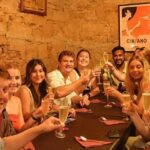
One of the most fun parts is the open bar of sangría. It’s described as bottomless, and the experience notes that the sangría recipe is taught as a local secret so you can surprise friends later.
This matters for two reasons:
- It keeps the class mood relaxed.
- It turns the cooking into a social event, which helps learning stick.
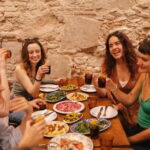
The venue is also described as candle-lit and cozy for dinner, and the atmosphere is that “sit down together and share” style. That’s a big contrast to a lot of food tours where you eat while standing or quickly move on. Here, you cook, then you settle in for the meal you made.
In short: you get a lesson, then you get to enjoy it immediately. That combination is one of the reasons people rate this so highly.



Price and Value: What $81.71 Buys You in Barcelona
At $81.71 per person for about 2 hours, this doesn’t feel like just a basic cooking class. The value comes from three areas you’ll actually use:
- You’re included on food: starters and dinner are part of the experience, not a separate upsell.
- You’re included on drink: alcoholic beverages via an open bar of sangría.
- You’re included in the learning environment: small-group attention with an open-kitchen teaching setup.
If you’ve ever paid for a “food experience” that turns into mostly tasting, you’ll likely appreciate the hands-on element here. The cooking is the main event, and the meal is the payoff.
Also, the class is scheduled at 7:00 pm. That’s prime “I want dinner but I also want something to do” time. If you’re already planning to eat in the evening, this is a neat way to turn dinner plans into an activity.
Timing, Location, and How to Plan Your Evening
Start time is 7:00 pm, and the activity ends back near where you begin. The meeting point is easy to find in central Gràcia, and it’s described as near public transportation. That helps if you’re staying elsewhere in the city.
My practical advice: plan for a normal dinner appetite. Come hungry, because the pace is set so you don’t end up with a long pause between cooking and eating. If you’ve spent the day rushing around, this kind of structured evening can actually feel like a reset.
Group size is capped at 12, and the experience is offered in English, so it’s a good choice for mixed-language groups as long as you’re comfortable following along in English.
Who This Class Is Best For (and Who Might Want Another Option)
This experience is a strong fit if:
- you want a hands-on paella class rather than watching
- you like Catalan flavors and seafood
- you want a small-group setting where questions are welcome
- you enjoy a social dinner vibe with wine or sangría included
It may not be ideal if:
- you don’t drink alcohol and want a strictly non-alcohol setting (the sangría bar is a major feature, though bottled water is included too)
- you’re sensitive to late-evening timing, since it’s a 7:00 pm start and about 2 hours long
- you prefer a very formal, silent cooking classroom style rather than the casual, chat-friendly tone
If you’re visiting Barcelona for a short trip and want one “do something real” experience that ties together Spanish food and technique, this fits nicely.
Should You Book Kampada’s Paella Cooking Class in Gràcia?
Book it if you want a meal you helped create, with traditional seafood paella and Catalan tapas, in a small-group format. The learning focus is practical: you’ll cook, ask questions, and leave with techniques that you can repeat.
Skip it if your schedule can’t handle a 7:00 pm start, or if you’re looking for a strictly non-drinking food workshop. Also, if you’re expecting a long sightseeing tour, this is not that. It’s a dinner-centered cooking experience.
For most people, though, it’s a well-paced way to learn Spanish cooking while enjoying a fun night in Gràcia.
FAQ
What’s the duration of the paella cooking class?
It runs for about 2 hours.
Where does the class take place in Barcelona?
It’s in Gràcia, starting at L’ExquisEat, Carrer de Santa Magdalena, 9, 08012 Barcelona. The activity ends back at the meeting point.
Is the class offered in English?
Yes, the experience is offered in English.
How many people are in the group?
The class has a maximum of 12 travelers.
What’s included with the ticket?
You get the course meal (tapas snacks and the dinner experience), bottled water, and alcoholic beverages via a sangría bar.
Do they provide a mobile ticket?
Yes, you’ll receive a mobile ticket.