REVIEW · BARCELONA
Barcelona: Gothic Quarter Walking Tour with Optional Tapas
Book on GetYourGuide →Operated by Amigo Tours Spain · Bookable on GetYourGuide
Old stones tell Barcelona’s story fast. This Gothic Quarter walk is interesting because you piece together how Barcelona grew from Roman times into a medieval power center, with stops tied to real historical figures. I also like the optional tapas finish, because it turns the tour into something you can taste, not just see.
One thing to plan for: this is a lot of walking, roughly 2.5 hours on foot, in tight streets. If your mobility is limited, you may find it uncomfortable.
In This Review
- Key highlights worth your attention
- Starting at Pl. de Catalunya and the Fountain of the Six Putti
- Gothic Quarter streets: how “old Barcelona” actually feels on foot
- Ramblas and the Emperor Augustus founding story
- The old port area and the remaining city wall traces
- Nova Square and Barcelona’s Gothic Cathedral focus
- Plazas that map Barcelona’s civic and political heart
- Catalonia’s flag, plus the human stories behind the stones
- The optional tapas finish: one drink, tapas, and a quick local break
- Price and logistics: does $28 feel fair?
- What you’ll really do in 2.5 hours on foot
- Who should book this and who should skip it
- Should you book the Gothic Quarter walking tour with tapas?
- FAQ
- Where does the tour start?
- How long is the walking tour?
- What languages are offered?
- Is tapas included in the price?
- What’s covered in the tapas tasting?
- Are monument tickets included?
- Is the tour suitable for wheelchair users or reduced mobility?
- What’s the cancellation and payment flexibility?
Key highlights worth your attention
- Fountain of the Six Putti start point: a clear meet-up spot at Pl. de Catalunya, with an Amigo Tours sign.
- Roman vestiges in daily street life: you’ll spot traces that still show up as you move through the Gothic Quarter.
- Ramblas plus an Augustus backstory: the guide connects the city’s origin story to what you’re seeing.
- Catalan identity woven into the walk: you’ll learn how the Catalonia flag design developed.
- Major plazas of power: Plaza del Rei, Plaza del Pi, and Plaza de Sant Jaume, with the town hall and Palau de la Generalitat.
- Optional tapas tasting (30 minutes): typically includes a drink, tapas, and local snacks if you choose that add-on.
Starting at Pl. de Catalunya and the Fountain of the Six Putti
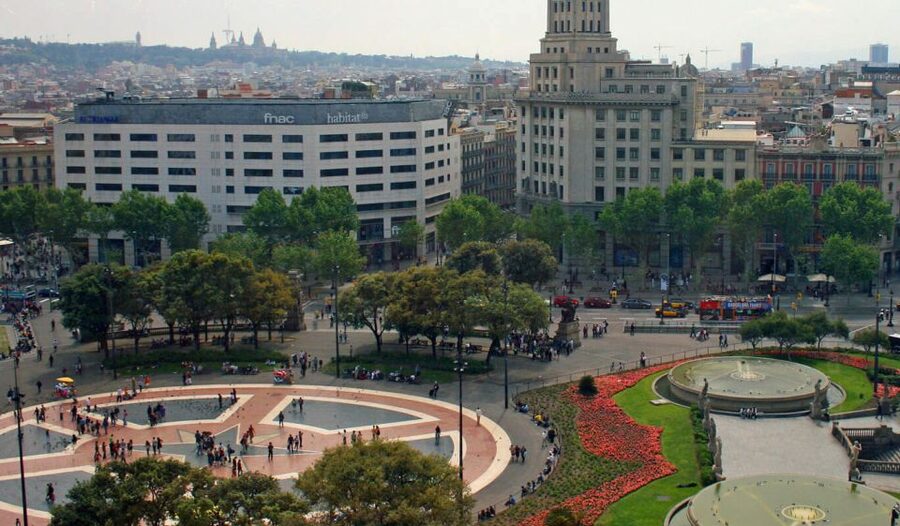
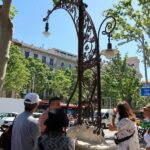
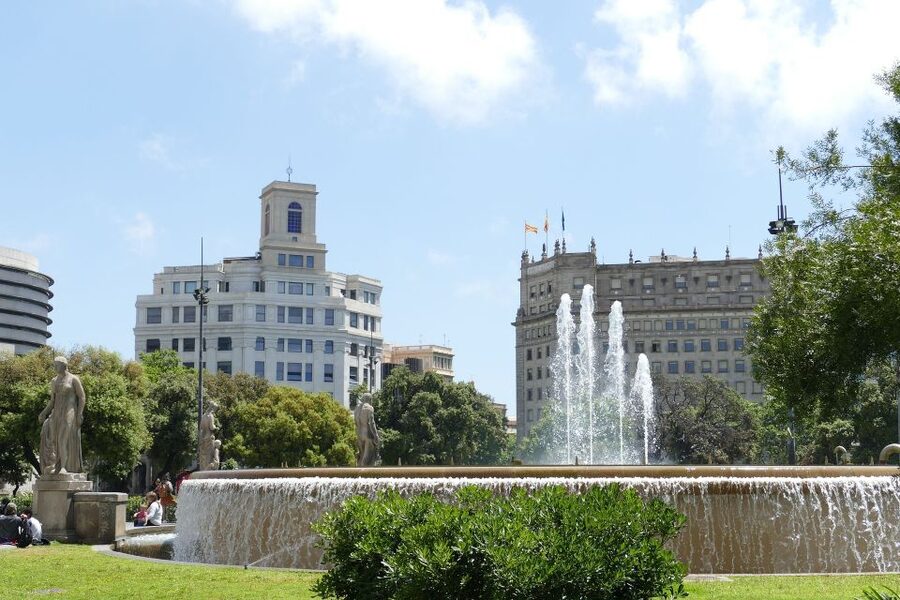
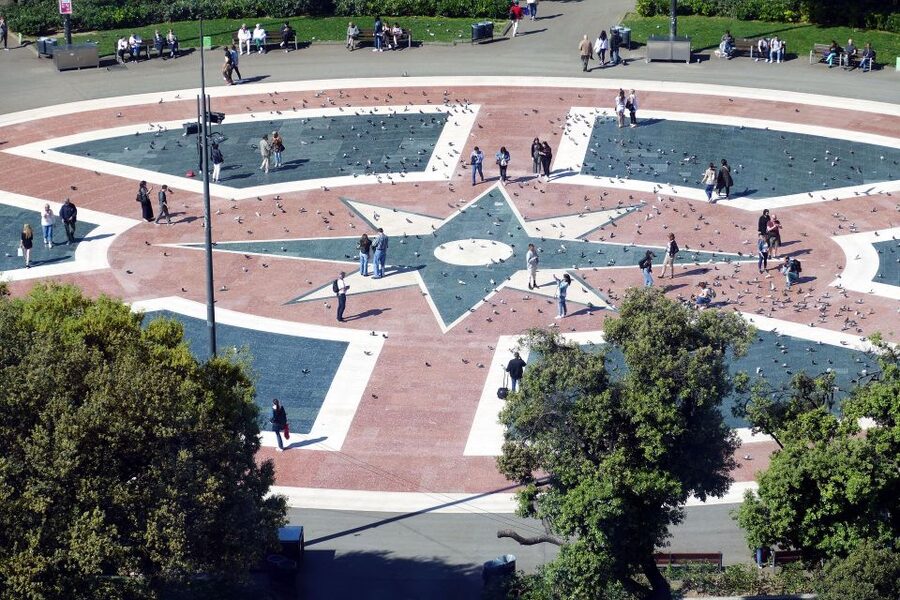
Your tour begins near the Fountain of the Six Putti, at Pl. de Catalunya (address: Pl. de Catalunya, 31). It’s a practical starting point because it’s central and easy to orient yourself before you start moving into narrower streets.
When you arrive, look for your guide holding an Amigo Tours sign. That detail matters more than you’d think on a busy Barcelona day. The first 5 minutes decide whether the rest of the tour feels smooth or stressful.
If you’re the type who likes to get your bearings quickly, this start helps. You’re not scrambling for a meetup point once you’re already late and surrounded by tourists. You can step into the walk with a plan: listen, look up, and keep your eyes open for old shapes and older layers.
You can also read our reviews of more tours and experiences in Barcelona.



Gothic Quarter streets: how “old Barcelona” actually feels on foot
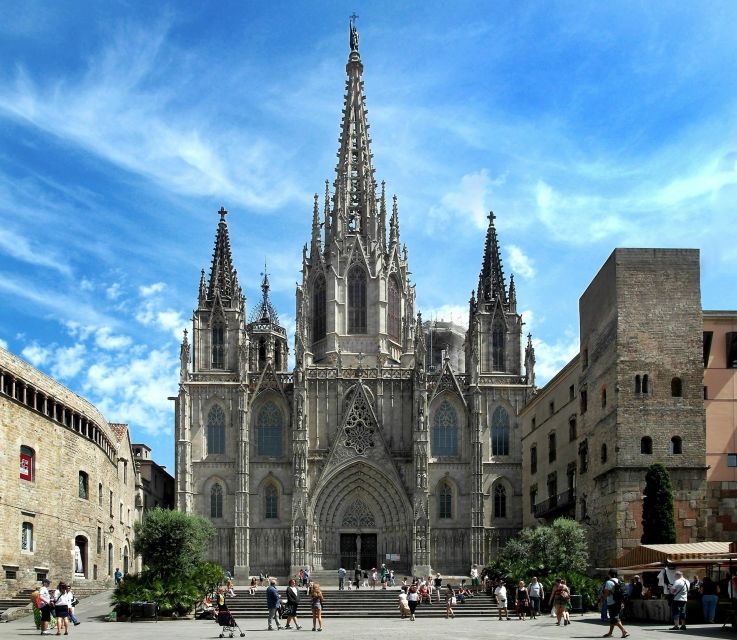
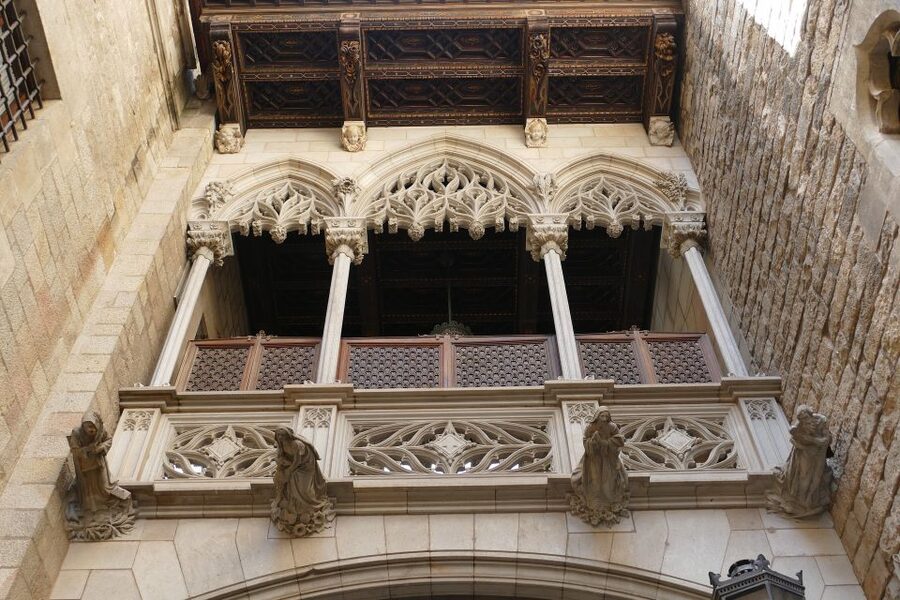
The Gothic Quarter is the oldest core of Barcelona, and the big advantage of a walking tour here is that you experience its scale. The area isn’t just a list of landmarks. It’s a maze of streets where history shows up as layout, stonework, and surviving fragments.
As you move through the narrow streets, your guide ties what you’re seeing to what it used to mean. You’ll also get pointed context on figures tied to Barcelona’s past, including St. Roque and Wilfredo the Hairy. That kind of storytelling can turn a random statue or name carved into a façade into something you remember.
What I like about this approach is that it doesn’t force you to interpret everything alone. You get a human thread through the quarter: people, places, and why they mattered. When you’re done, you walk away with a mental map of the Gothic Quarter, not just photos.
A note that’s worth taking seriously: monuments aren’t automatically part of the package. Tickets to enter monuments are not included. So you’ll rely on what you can see from the street and any stops that don’t require paid entry.
Ramblas and the Emperor Augustus founding story
One of the reasons this tour works well for first-timers is that it connects two different vibes of Barcelona. You start in the Gothic Quarter, but you also walk down one of the city’s most famous avenues: the Ramblas.
As you stroll, the guide explains how Barcelona was founded by Emperor Augustus. That origin story matters because it gives you a framework for everything else you’ll notice later: Roman influence, early city planning, and why certain areas developed into the core.
Even if you’re already familiar with the big-name sights, the Augustus angle helps you reframe the walk. Instead of treating the Gothic Quarter as purely medieval, you start seeing it as the result of layers of settlement. You’ll be more alert to what looks “too old” to be medieval, and that’s when the story clicks.
The old port area and the remaining city wall traces
After the Ramblas section, you reach the old port area. This is one of those parts of Barcelona where your imagination has to do some work, because the city has changed so much over time.
Still, you’re not walking through a blank space. You’ll be shown remains of the old city wall as you move through the Gothic Quarter’s narrow streets. Seeing those kinds of fragments in place is different from reading about them later. You get scale, direction, and the sense that the wall used to shape movement through the city.
This section also helps you understand why the Gothic Quarter feels like it does. Walls and ports influence street patterns. Even when you can’t measure every historical detail, you can feel how the city’s older boundaries shaped how people walked and traded.
Nova Square and Barcelona’s Gothic Cathedral focus
Nova Square is the next big landmark moment. From here, you admire the Cathedral of Gothic style in the center of the Gothic Quarter.
This stop is valuable even if you don’t plan to enter the cathedral. Cathedral exteriors and their surrounding squares teach you how Barcelona’s civic and religious life lined up in space. You get a clear visual anchor inside a neighborhood that otherwise can blur together.
If you’re photo-minded, this is the point where your camera can actually rest. It’s not just quick peeks. It’s a “pause and register what you’re looking at” moment, with the guide explaining how to read the structure and the setting.




Plazas that map Barcelona’s civic and political heart
The tour then moves through a sequence of squares that make the Gothic Quarter’s layout feel logical. These are not random scenic stops. They’re places where power lived, and your guide connects that power to the current political and administrative center of the city.
You’ll pass through Plaza del Rei and Plaza del Pi, then reach Plaza de Sant Jaume. This last square is especially important because it’s the current administrative and political center, which means it’s where Barcelona’s governance story continues into today.
From there, you see the town hall and the Palau de la Generalitat. Again, you’re not just sightseeing façades. You’re seeing how the city’s public role is located physically, right in the middle of the medieval fabric.
A smart tip: slow your pace in these plazas. They’re open enough to regroup, check your phone for maps if you’re using one, and let the guide’s timeline land. In tight streets you can’t always absorb everything at once, but in a square you can.
Catalonia’s flag, plus the human stories behind the stones
Along the walk, your guide also covers how the current design of Catalonia’s flag developed. That’s one of those lessons that feels small while you’re hearing it, then becomes bigger when you notice flags, colors, and identity all over the city later that day.
You’ll also hear about historical figures such as St. Roque and Wilfredo the Hairy. The value here is perspective. These names aren’t meant to be memorized like homework. They help explain why certain images, stories, and symbols appear in the quarter.
If you like culture that feels grounded in place, this part of the tour is a strong match. You start connecting national and regional identity to actual street-level details.
The optional tapas finish: one drink, tapas, and a quick local break
At the end, you can upgrade to a local tapas tasting. If you choose this option before booking, the tasting segment is built into the experience as a relaxed finish rather than an awkward scramble for food.
This part runs about 30 minutes and includes wine tasting, local snacks, and tapas (regional food). The included tasting also includes one drink and tapas for the option-selected experience.
Two practical reasons this stop is worth the upgrade:
- You get a guided context for what you’re eating, so it’s not just consuming food while tired.
- You avoid decision fatigue. Barcelona has plenty of places to eat, but after a long walk, it’s nice to have a plan already made.
When you’re done eating, the guide is also a useful resource for what to do next. The tour’s final moments are a good time to ask for recommendations for the rest of your Barcelona time.
Price and logistics: does $28 feel fair?
At $28 per person for a 2–3 hour guided walk, the value depends on one thing: whether you’ll actually enjoy learning while walking and whether you can fit the route into your day.
This price includes:
- a professional guide and guided walking tour
- live bilingual commentary in English and Spanish
- and (only if selected) one drink plus tapas
Tickets to monuments are not included. That doesn’t make the tour “worse,” it just means you should expect street-level viewing and guided explanations rather than a ticketed itinerary full of paid entries.
Where $28 tends to feel fair is when you’re balancing effort and structure. The Gothic Quarter is easy to get lost in, and getting meaning from it on your own takes time. A good guide saves that time for you, and the tapas add-on can turn the end of the tour into something genuinely restorative.
What you’ll really do in 2.5 hours on foot
This is the kind of tour where pace is part of the deal. Plan to walk a lot, mostly through older streets and along key city corridors like the Ramblas.
The route you’ll cover follows a logical story arc:
- start at Pl. de Catalunya
- move into the Gothic Quarter for the core neighborhood experience
- walk down the Ramblas with origin-story context tied to Emperor Augustus
- continue toward the old port area and the traces of older boundaries
- pause at Nova Square to focus on the cathedral setting
- then shift through plazas tied to civic life, ending near Plaza de Sant Jaume and major government buildings
- optionally finish with tapas and wine tasting
That structure is useful because it keeps the tour from turning into disconnected sightseeing. Even if you only remember a few landmarks, you’ll still come away with a sense of how Barcelona’s city center evolved.
Who should book this and who should skip it
This tour is a great fit if you:
- want an orientation-level understanding of the Gothic Quarter and why it matters
- enjoy walking tours that include specific cultural context, not just “look here” stops
- like a practical add-on at the end, especially if you want tapas without hunting for a place
It may be less comfortable if you have mobility constraints. Even though the activity is marked as wheelchair accessible, the notes clearly warn it may not be recommended for reduced mobility or wheelchair users. The Gothic Quarter’s streets and the duration on foot are the main reason.
Also, if you’re hoping for a tour that includes lots of entrances into monuments, keep expectations aligned. Tickets are not included, and some spots you might want to enter may simply not be part of the plan.
Should you book the Gothic Quarter walking tour with tapas?
I’d book this if your goal for Barcelona is to understand the city center through real locations: Roman traces, medieval streets, and the civic heart of today. The $28 price is reasonable for a guided, bilingual route that turns confusing old streets into a story you can follow. The optional tapas finish is a smart add-on if you want your walking day to end with a low-effort, locally focused meal.
Skip it if you want a minimal-walking experience or if you’re mainly chasing paid monument entries. For everyone else, this is one of those tours that makes your later self-guided exploring easier, because the Gothic Quarter starts to feel like a map instead of a maze.
FAQ
Where does the tour start?
You meet your guide next to the Fountain of the Six Putti at Pl. de Catalunya, 31, 08002 Barcelona. The guide carries an Amigo Tours sign.
How long is the walking tour?
The experience runs about 2 to 3 hours, with walking throughout (around 2.5 hours).
What languages are offered?
The tour provides live bilingual commentary in English and Spanish.
Is tapas included in the price?
Tapas and one drink are included only if you select the tapas tasting option before booking.
What’s covered in the tapas tasting?
The tasting portion is about 30 minutes and includes wine tasting, local snacks, and tapas (regional food), plus one drink.
Are monument tickets included?
No. Tickets to monuments are not included, so any entry you want may require additional plans on your own.
Is the tour suitable for wheelchair users or reduced mobility?
The activity is marked as wheelchair accessible, but the guidance also notes it may not be recommended for wheelchair users or people with reduced mobility due to the amount of walking.
What’s the cancellation and payment flexibility?
You get free cancellation up to 24 hours in advance for a full refund, and there’s an option to reserve and pay later.