Valencia hides its history under your feet. This 2-hour 15-minute old-town history walk links the underground l’Almoina ruins with a mid-route tapas break at Plaza Redonda. I love how you get built-in context for the sights, and I love that the tour includes two proper Valencian tapas instead of just a quick snack.
What makes it work is the pacing and the fact it’s a small group (max 10). It’s offered in English, and guides like Juan are known for clear explanations and helpful, practical food tips after the tour.
Two things to plan around: drinks aren’t included, and the experience requires good weather since you’re walking the historic center.
In This Review
- Key takeaways before you go
- Mapping Valencia in 2 hours 15 minutes without losing the thread
- Stop 1: Plaça de la Mare de Déu and the forum-to-cathedral setup
- Stop 2: Plaça de l’Almoina, where you literally walk above time
- Stop 3: Valencia Cathedral and the Holy Grail story you’ll actually remember
- Stop 4: Iglesia de San Juan del Hospital, old church shape with two styles
- Stop 5: Mascleta Plaza Del Ayuntamiento and the civic heart of Fallas time
- Stop 6: Plaza Redonda tapas break, where the market history still shows
- Stop 7: La Lonja de la Seda and the Central Market (1928) connection
- Stop 8: House of Cats and Valencia’s playful street legends
- Stop 9: Plaça del Carme, the Carmen district, and the air-raid shelter under you
- Stop 10: Torres de Serranos, Gothic gate history and Civil War protection
- What the included tapas actually add to the tour
- Price and logistics: when $41.39 feels fair
- Who this tour is best for
- Should you book Magical Valencia: Mysteries & Tapas Adventure?
- FAQ
- How long is the Magical Valencia tour?
- Is the tour offered in English?
- What’s included, and is there food?
- Do I need tickets for the stops?
- Where does the tour start and end?
- What if the weather is bad or I need to cancel?
Key takeaways before you go
- Walk over layered ruins at l’Almoina with glass panels above Roman, Visigothic, Islamic, and Christian remains
- Cathedral time feels personal, with Holy Grail lore tied to the building’s many past lives
- Two tapas dishes are included at Plaza Redonda, where the neighborhood vibe also makes the break feel local
- Fallas and civic Valencia meet at Plaça de l’Ajuntament, including the City Hall and related landmarks
- Civil War history shows up in unexpected places, from Plaça del Carme’s shelter to Torres de Serranos
- Small-group pace keeps the walk from feeling like a stampede (and makes questions easier)
Mapping Valencia in 2 hours 15 minutes without losing the thread
This tour is built for one big job: help you connect what you see to what came before it. In Valencia’s old center, the street level can look simple, but the story underneath is layered and long. That’s why the format matters. You’re not just hopping between landmarks. You’re getting a guided line through the city, from ancient forum-era walls to medieval churches, to civic plazas, to Civil War scars.
The route is designed as a walk you can handle for most people, and the group size stays small enough to keep the tour feeling human. You’ll also use a mobile ticket, which is handy if you don’t want to fuss with printed passes. It’s near public transportation too, so if you’re staying in Ciutat Vella or nearby, you won’t waste time getting to the start.
Value-wise, the math is straightforward. At $41.39 per person, you’re paying for an expert guide plus two included tapas dishes. The drinks are separate, so your final spend depends on how much you want to drink. Still, for a short time window, getting food included is a big part of the deal.
You can also read our reviews of more tours and experiences in Valencia.


Stop 1: Plaça de la Mare de Déu and the forum-to-cathedral setup
You start at Plaça de la Mare de Déu in Ciutat Vella. This square sits in the orbit of major landmarks: the Cathedral area, the Basilica of Our Lady of the Forsaken, and the Palau de la Generalitat. The tour’s first job here is to set your bearings fast, so later stops make sense instead of feeling like a random checklist.
Why this opening works: squares like this are where civic power and religious power overlap in city life. Even if you’ve walked around Valencia before, having someone explain the relationship between these buildings makes the whole area click. You’ll also get an early sense that Valencia’s center isn’t a single era. It’s a stack.
One practical note: the stop lasts about 10 minutes, and admission is not included for this first area. So if you decide you want to go inside during this stop, budget for the separate ticket.
Stop 2: Plaça de l’Almoina, where you literally walk above time
This is one of the most memorable parts of the route because it’s physical. At Plaça de l’Almoina, you look down through glass panels and see remains from multiple eras. The idea is simple and powerful: you move along a modern walkway while Roman, Visigothic, Islamic, and Christian layers sit under your feet.
What I like about this stop is that it changes how you see the city. Instead of treating history as museum glass, you start treating it as a living set of foundations. You come away with a mental map: when Valencia looks medieval, it may be sitting on much older structure.
The stop runs around 10 minutes and is free for admission. That makes it a great choice even if you’re traveling on a tighter schedule or you’d rather spend your money on the experience’s included food.
Stop 3: Valencia Cathedral and the Holy Grail story you’ll actually remember
Next is Valencia Cathedral, one of the most important stops on the walk. The tour frames it with a big legend: the Holy Grail, believed by many to be the authentic chalice. Whether you’re religious or skeptical, the story gives you a reason to look closely at the building instead of just moving past it.
Even more useful than the legend is the explanation of how the Cathedral took shape over time: a Roman temple → Visigothic church → mosque → cathedral. That sequence is the key to understanding why the Cathedral feels like it has layers of identity. You’re not looking at one single answer. You’re looking at adaptation across centuries.
Admission at this stop is free, and the time here is about 20 minutes. That’s enough to absorb the main points without getting stuck. If you love architecture, you’ll get more out of this stop. If you’re less into buildings, you’ll still benefit because the guide’s story gives your eyes something to do.
Stop 4: Iglesia de San Juan del Hospital, old church shape with two styles
After the Cathedral, you move to Iglesia de San Juan del Hospital, described as the oldest Christian temple in Valencia. The tour spotlights a rare mix of Romanesque and Gothic styles, which is exactly the kind of detail that makes a short stop worthwhile.
Why this matters: many churches in Europe either read as one style or one period. Here, the building’s look signals change. That’s useful context when you’re walking around older cities where styles overlap instead of neatly replacing each other.
This stop takes around 15 minutes and is free. It’s also a nice change of pace after the bigger, more famous Cathedral area. If you like seeing how different eras lived side by side, this is the kind of place you’ll appreciate.




Stop 5: Mascleta Plaza Del Ayuntamiento and the civic heart of Fallas time
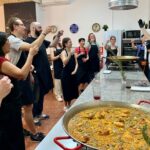
Then comes a different kind of Valencia. You’ll stand in the area known for mascletàs during Fallas at the Plaza del Ayuntamiento. The tour doesn’t promise fireworks on your schedule, but it gives you the context for why this plaza matters when the city is in full festival mode.
This stop is about civic power as much as it is about sound and celebration. You’ll also admire the grand City Hall, the Central Post Office, and the Ateneo Mercant. The takeaway is that Valencia’s public spaces aren’t just pretty. They’re stages for how the city gathers, shows off, and marks important moments.
You get about 10 minutes here, and admission is free. If your visit happens outside Fallas season, you’ll still understand why locals care about the location, because the guide connects the plaza’s layout to the tradition.
Stop 6: Plaza Redonda tapas break, where the market history still shows
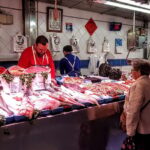
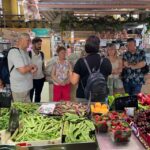
Now for the most practical part of the tour: Plaza Redonda. This is a good midday or early-afternoon pause because the square has character. It used to be a meat and fish market, and today it functions as a lively hub of artisan shops.
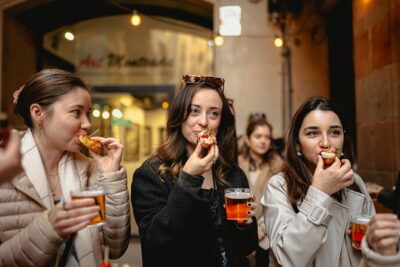
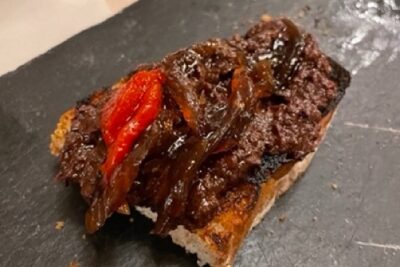
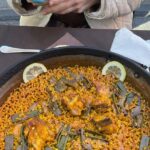
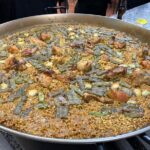
The best part is that you don’t just stop to look. You’ll enjoy two authentic tapas here. Since drinks aren’t included, I recommend treating the included tapas as the meal anchor, then deciding afterward whether you want extra drinks or a follow-up snack.
This stop runs about 20 minutes and is free to enter. I like that the tapas are placed after you’ve already learned enough history to make the rest of the walk feel like continuation, not repetition. By the time you eat, you’re ready to recharge.
Stop 7: La Lonja de la Seda and the Central Market (1928) connection
Next you reach La Lonja de la Seda, which in this route is linked with the Central Market built in 1928. The tour describes it as one of Europe’s largest fresh produce markets.
Even if markets aren’t your main interest, this stop is valuable because it shows another side of Valencia: not just sacred buildings and legends, but daily commerce and the flow of food. It also helps balance the tour. After churches and plazas, your brain gets a fresh kind of context.
This stop is about 15 minutes and is free for admission. It’s a quick but meaningful visit, especially if you enjoy the idea of food history and how cities feed themselves.
Stop 8: House of Cats and Valencia’s playful street legends
Then you switch from formal history to playful urban art: the House of Cats. It’s dedicated to Valencia’s feline legends, and it’s the kind of stop that reminds you this tour isn’t only about dates and dynasties.
Why it works in a history-focused route: it gives you contrast. You’ve spent the morning tracing big empires and major institutions, and now you see a city myth turned into public art. It’s a small reset for your attention span, and it makes the walking loop feel more varied.
This is about 15 minutes and free. If you like quirky details, you’ll probably enjoy this more than you expect.
Stop 9: Plaça del Carme, the Carmen district, and the air-raid shelter under you
Plaça del Carme is in the heart of the Carmen district, and the tour adds several layers of meaning to the area. You’ll see the church and the Palace of Pineda nearby, plus the tour points to a Civil War air-raid shelter beneath the square.
There’s also a statue of the painter Joan de Joanes. This stop is a reminder that art and politics often share the same city corners. A plaza can be both everyday and historical, depending on what’s under the pavement.
You get about 10 minutes here, and admission is free. The quick timing works because the content is intense: the shelter underfoot is the kind of detail that sticks. After this stop, the tour’s theme turns sharper toward survival and memory.
Stop 10: Torres de Serranos, Gothic gate history and Civil War protection
Your final stop is Torres de Serranos, a monumental Gothic gate from 1392–1398. The tour also explains how it was used during the Spanish Civil War: it protected Prado Museum masterpieces and once functioned as a prison for nobles.
This is a powerful ending because the story comes full circle. Earlier, you learned Valencia’s layers were architectural and spiritual. Here, the layers are political and cultural. The gate becomes not just a landmark, but a protector and a container of power.
The stop lasts around 10 minutes and is free to enter. It’s also a fitting finish point because you end near C. de la Blanqueria, close to the core of the old city. You can keep walking afterward, or use it as a clean handoff to your next plan.
What the included tapas actually add to the tour
Food stops on city walks can feel like an afterthought. Here, the tapas break is built into the rhythm of the route. Plaza Redonda isn’t just a place to eat; it’s a place that carries history as a market site. When you sit down for tapas, the tour’s theme shifts from monuments to daily life.
You’re getting two traditional tapas dishes included, which is a real savings over paying separately for both food items. Drinks are not included, so you’ll likely buy water, soda, or something stronger depending on your taste. If you’re aiming for maximum value, you can keep your drinks simple and let the included dishes do the heavy lifting.
Also, the guide’s role matters here. The pacing means you’ll know where you are and what to look for when you stand up again. And if you’re the kind of person who wants a follow-up dinner plan, you’ll appreciate getting practical direction from a guide like Juan.
Price and logistics: when $41.39 feels fair
Let’s talk money in a way that helps you decide. At $41.39 per person, you get:
- a guided walking route through major old-town landmarks
- English interpretation
- two included tapas dishes
- an expert guide
- a small group size (max 10)
Most of the stops are free to enter, while the first stop notes admission is not included. That means a good chunk of your tour spend goes toward guide time and coordination, not just entry fees.
So when does this feel like a great buy? When you want a focused route with food included, and you don’t want to spend your vacation sorting out what to see in what order. It also helps if you prefer learning with context, since the tour weaves the stops into a single story.
When might it be less ideal? If you plan to drink heavily at the tapas stop, your final cost could creep up because drinks aren’t included. Also, if you hate walking, the historic-center route may feel like a lot for your legs, especially in warm or rainy conditions (the experience requires good weather).
Who this tour is best for
This is a strong match if you:
- want a guided framework for Valencia’s old center instead of wandering with zero structure
- like architecture and want the “what came first” explanation at major sites
- care about food, since you’ll get two tapas dishes included
- enjoy oddball details too, like the House of Cats and the air-raid shelter under Plaça del Carme
- prefer smaller groups so you can ask questions
It’s also a good choice for couples and solo travelers. The route is linear, and the small group size keeps the atmosphere calm. If you’re traveling with kids, the short stops and built-in breaks can work well, especially since the tour is designed for most travelers.
Should you book Magical Valencia: Mysteries & Tapas Adventure?
Yes, if you want one of the most efficient ways to understand Valencia’s layers. The best reason to book is the combination: history that’s explained clearly, plus two included tapas at a square with market roots. It’s not just sight-seeing. It’s a story you can walk through.
I’d think twice if you strongly prefer self-paced exploring with no guided walking rhythm, or if you know you’ll be unhappy without a drink package. Also, since it needs good weather, plan for backups if rain is likely on your dates.
If you’re staying in or near Ciutat Vella and you want a short, high-impact plan, this is the kind of tour that makes the rest of your Valencia days easier. You’ll leave with a clearer mental map of where you are in the city’s timeline.
FAQ
How long is the Magical Valencia tour?
The tour lasts about 2 hours 15 minutes.
Is the tour offered in English?
Yes, it is offered in English.
What’s included, and is there food?
The experience includes an expert tour guide and two traditional tapas dishes. Drinks are not included.
Do I need tickets for the stops?
Most stops are free to enter. The first stop, Plaça de la Mare de Déu, notes that an admission ticket is not included. The rest are listed as free.
Where does the tour start and end?
It starts at Plaça de la Mare de Déu in Ciutat Vella, València, Spain, and ends at Torres de Serranos (C. de la Blanqueria, 1, Ciutat Vella, 46003 València, Valencia, Spain).
What if the weather is bad or I need to cancel?
The experience requires good weather. If it’s canceled due to poor weather, you’ll be offered a different date or a full refund. There is free cancellation, with a full refund if you cancel at least 24 hours before the experience’s start time.