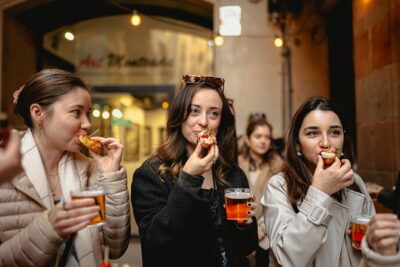
Santiago tastes better on foot. This 3.5-hour tapas walk links the old-city squares to classic Galician food you actually get to try, guided by a local in English. You’ll start at Praza de San Fiz de Solovio and end at the Mercado de Abastos, with stops paced for asking questions and nibbling along the way.
I love that you don’t just sample a couple bites—you eat the equivalent of a meal across several tastings, with water and alcohol in fixed amounts (for guests 18+). I also like the way the tour blends food with street-level context, so you understand why symbols like the Conchas matter, not just what you’re eating.
One thing to plan around: if you have severe or life-threatening food allergies, you can’t join, and specific tapas can shift with the season and what partner places have available.
In This Review
- Key Highlights at a Glance
- Getting Oriented at Praza de San Fiz de Solovio
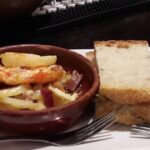
- Galician Tapas First Course: Mussels, Octopus, Empanada Gallega
- Concha de Santiago and Comfort-Food Tortilla
- Praza de Fonseca: Galician Cheese with a Glass of Local Wine
- Mercado de Abastos Finish: Tarta de Santiago (or Ice Cream)
- What You Get for the Price: Value, Portions, and Drink Rules
- The Pace and Walking Reality (Moderate Fitness Is the Right Call)
- Guides, Questions, and the Food-and-City Connection
- Who Should Book This Santiago Tapas Tour
- Should You Book Tapas Drinks and Delights with a Local?
- FAQ
- How much does the Santiago Food Tour cost, and how long is it?
- Where do I meet, and where does the tour end?
- Is the tour offered in English?
- Are alcoholic drinks included?
- Is there a vegetarian option?
- What if I have a serious food allergy?
- Can I cancel for free?
Key Highlights at a Glance
- Four-plus stops that add up to a real meal (not a couple token samples)
- Galician specialties in the mix like seafood and empanada gallega
- Tortilla at Concha de Santiago, right by Santiago Way symbolism
- Galician cheese with local wine at Praza de Fonseca
- Sweet ending at Mercado de Abastos with Tarta de Santiago (or ice cream)
- Small group size (max 12) for a calmer pace and easier questions
Getting Oriented at Praza de San Fiz de Solovio
Your tour begins in Praza de San Fiz de Solovio, an easy starting point in the historic center. This plaza sits in the shadow of a church built in the 12th century, and it’s one of those spots where Santiago feels layered—Romanesque roots, newer additions, and all the everyday foot traffic that keeps the place alive.
You’ll meet your local expert here, and the early moments matter more than people think. In a city like Santiago de Compostela, first impressions can be confusing if you’re just wandering. With this start, you get your bearings fast: where you are, why the streets curve the way they do, and how the tastings tie into the neighborhood rhythm.
Also, you’ll be given a mobile ticket, and you’ll be with an English-speaking guide who may also use some Spanish. That flexibility helps if you spot a sign or menu detail and want clarification on the spot.
You can also read our reviews of more tours and experiences in Santiago de Compostela.


Galician Tapas First Course: Mussels, Octopus, Empanada Gallega
After the meet-up, the tour moves toward the first tastings, designed to get you eating right away. This is where you’ll start meeting Galician flavors in a straightforward way—things that make sense to order locally because they’re grounded in what the region actually produces.
Expect a selection that can include:
- Mussels from the Muros river
- Octopus
- Empanada gallega
- Potato tortilla (often later, but tortilla shows up as a theme)
These aren’t random tapas picked for show. The point here is variety: seafood-focused bites for the coast side of Galicia, plus comfort food that’s easy to recognize across Spain. You’ll also get a sense of how Galician cuisine leans savory, simple, and ingredient-forward rather than fussy.
The practical upside: because the tour spaces out tastings across multiple stops, you’re not stuck with a menu decision in a place you don’t yet understand. You can focus on tasting and learning instead of translating everything.
Concha de Santiago and Comfort-Food Tortilla
One of the coolest moments on this tour is the shift from food to symbol. Near Concha de Santiago—the scallhell motif strongly tied to the Saint James Way—you’ll try tortilla made with eggs, potatoes, and onions.
Why this stop works so well: tortilla is Spain’s comfort food, but eating it at a pilgrimage landmark gives it extra meaning. You’re not just consuming a classic; you’re connecting a regional staple to the story Santiago is famous for. Even if you’re not walking the Camino yourself, you’ll feel how central it is to the city’s identity.
Tortilla is also a smart pacing choice. It’s filling, but it’s not heavy in the same way a long meat-focused meal can be. That means you can handle the rest of the walk without feeling like you need a nap before the next square.
Praza de Fonseca: Galician Cheese with a Glass of Local Wine
Next comes Praza de Fonseca, one of those Santiago squares where the architecture makes you slow down. You’ll look out toward the Colexio de Fonseca, the older seat connected to Santiago’s university story, and you’ll get views of its Renaissance courtyard.
Then, right here, you’ll do the next tasting: Galician cheese served with a glass of local wine. Cheese and wine can go two directions on a tour—either you get a neat pairing that feels thoughtful, or you get something generic. This stop is built to highlight what Galicia does well: dairy products that taste like real regional ingredients, not just a safe tourist plate.
If you’re the type who wants to bring one flavor memory home, this is the moment. It’s easier to remember cheese and wine than a dozen seafood bites. Plus, the setting helps: you’re eating in a place that feels like it belongs to the city, not a random storefront.
Mercado de Abastos Finish: Tarta de Santiago (or Ice Cream)
The final stretch lands at Mercado de Abastos, Santiago’s historical market area, serving locals for more than 300 years, even though the current structure was reconstructed in 1941. Markets like this are where a city’s everyday life shows up—less performance, more habit.
You’ll end your culinary journey with a sweet note that depends on the season:
- Tarta de Santiago, the almond cake
- or Tarta de Santiago–flavored ice cream
Either way, you’re finishing with a dessert that carries Santiago branding. The almond cake is a classic, and when it’s turned into ice cream, it becomes an easy, low-effort way to cap the tour after several savory stops.
This ending also makes practical sense. A market is a natural landing point for wrapping up your walk—easy to find your next meal or continue exploring on your own.
What You Get for the Price: Value, Portions, and Drink Rules
The price is $89.36 per person for about 3 hours 30 minutes, offered in English. Here’s what pushes this into good value instead of feeling like a pricey snack run.
Included basics:
- Meals: the tour is designed so that by the end you’ve eaten the equivalent of a meal across at least 4 stops
- Water
- Alcoholic beverages in fixed amounts for guests over 18
- English-speaking local guide
In other words, you’re paying for organization, not just food. Without a tour, it’s harder to line up multiple tastings in a compact route, and you’d probably end up piecing it together with fewer meaningful connections between stops.
The alcohol detail also matters for planning. Drinks are included, but only in fixed amounts. That keeps the tour moving and prevents the common problem of “we’re paying for drinks but still hungry.” If you’re under 18, or you prefer not to drink, non-alcoholic options are available, so you’re not forced into alcohol to participate fully.
The Pace and Walking Reality (Moderate Fitness Is the Right Call)
This isn’t a strenuous hike, but it is a walking tour. You’ll have a moderate physical fitness level requirement, so comfortable shoes are a must. The benefit of the pace is that you’re not rushed through tastings. You can ask questions, look around the squares, and still stay on schedule.
Group size is max 12 travelers, which changes the vibe. Small groups usually mean:
- you get more time with the guide
- it’s easier to hear explanations
- the tour feels less like a conveyor belt
If you’re traveling with friends and want a calm, social pace instead of a sprint, this fits that goal well.
Guides, Questions, and the Food-and-City Connection
From the accounts I’m seeing tied to this experience, the best part isn’t only the food. It’s the way the guide connects bites to place.
In particular, Silvia shows up in standout feedback: people describe her as personable, with a knack for tying current food culture to the region’s background. There’s also mention of a second guide or trainee (like Natalie) supporting the experience, and that adds a friendly, steady feel—less pressure, more room to ask questions.
Practically, this is what you want from a food tour in Santiago:
- short explanations that help you taste with context
- clear answers when you ask what something is or why it’s popular
- a pace that leaves time to look at the city, not just eat it and run
If you’re the kind of traveler who likes to understand the why behind food choices, you’ll appreciate that this isn’t only a lineup of dishes.
Who Should Book This Santiago Tapas Tour
I’d book this if you want:
- a structured way to eat through Galician flavors
- a walking route that covers the most iconic symbols and squares
- included drinks and water, handled in a simple, fixed way
It’s also a good pick for first-timers in Santiago de Compostela who want an orientation without committing to a full-day sightseeing plan.
I’d think twice if:
- you have severe or life-threatening food allergies (the tour can’t accommodate those cases)
- you only want a very light snack experience (this tour is built to feel like a meal)
- you hate walking on cobblestones (you’ll be on foot for multiple stops)
Should You Book Tapas Drinks and Delights with a Local?
Yes, if your idea of a great Santiago day includes real tastings and a guided route through the old city. The biggest strength is the balance: you get enough food to feel satisfied, enough context to make the city click, and enough structure to avoid the usual tapas-tour chaos where everyone is searching for the next place.
One smart move before you go: if you’re vegetarian or have any dietary restrictions, flag it ahead of time so the guide can align tastings with what’s available. And if you’re planning alcohol, remember the 18+ rule—it’s included only for eligible guests, with non-alcoholic options for everyone else.
If you want a practical “eat well, learn a bit, walk gently” experience in Santiago, this one is a strong fit.
FAQ
How much does the Santiago Food Tour cost, and how long is it?
The tour costs $89.36 per person and runs for about 3 hours 30 minutes.
Where do I meet, and where does the tour end?
You meet at Praza de San Fiz de Solovio, Santiago de Compostela and the tour ends at Mercado de Abastos (Rúa das Ameas, s/n). The exact end point may change slightly based on partner availability.
Is the tour offered in English?
Yes. The tour includes an English-speaking local guide. The guide may also speak English and Spanish during the tour.
Are alcoholic drinks included?
Alcoholic beverages are included in fixed amounts for guests over 18. There are also non-alcoholic options available.
Is there a vegetarian option?
Yes. Vegetarian options are available. If you have food restrictions, you should contact the operator before booking.
What if I have a serious food allergy?
Severe or life-threatening food allergies unfortunately aren’t accepted for this experience. For other restrictions, contact the operator before booking.
Can I cancel for free?
Yes. You can cancel for a full refund up to 24 hours before the start time. If weather forces a cancellation, you’ll be offered another date or a full refund.