REVIEW · ALICANTE
Alicante Paella Cooking Class, Tapas, Drinks and Marketplace
Book on Viator →Operated by Alicante Tasting Club · Bookable on Viator
Paella starts at the market. I love how this Alicante class pairs Mercat Central d’Alacant shopping with a hands-on paella lesson led by a local chef, then caps it with tapas, wine, and sangría. One thing to keep in mind: the market is time-bound, so if the stop runs right up against closing, you’ll have less wiggle room to wander between stalls.
This is a solid 3.5-hour food-focused plan, capped at a small group (max 16), and you finish with recipes to take home so the lesson doesn’t end when the pan cools down. It’s also easy to work into a day in Alicante since it runs in English (with English/Spanish support) and accommodates vegetarian, vegan, and gluten-free diets if you note it at booking.
In This Review
- Key Things to Know Before You Go
- Alicante Paella Starts With Smart Market Shopping
- Mercat Central d’Alacant: Buying Paella Ingredients Like a Local
- From Market to Kitchen: How the Cooking Class Runs
- Alicante-Style Paella: What You’ll Learn (and Why It Works)
- Tapas, Wine, and Sangría: Eating Like You Mean It
- The Best Part: Sitting Down to Your Own Paella
- Price and Value: Is $59.28 Worth It?
- Who Should Book This Alicante Cooking Class
- Should You Book It?
- FAQ
- Where does the tour meet?
- How long is the experience?
- Is it offered in English?
- What’s included with the paella class?
- Can you accommodate dietary restrictions?
- How big is the group?
- What’s the cancellation window?
Key Things to Know Before You Go
- Mercat Central d’Alacant first: you’re buying the ingredients on-site, not just watching a lecture about them
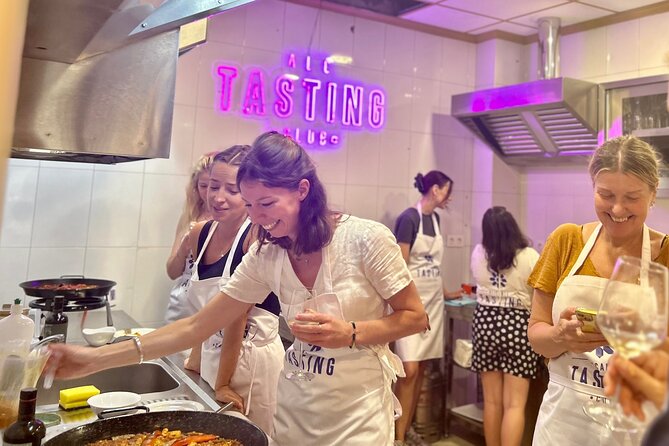
- Hands-on paella with a local chef: you do prep and cooking, not just tasting
- Meat, seafood, and vegetarian options: you can match your plate to your preferences
- Tapas plus local drinks: wines and sangría show up alongside the bites
- Recipes included: you leave with instructions you can actually use later
- Small group size (16 max): more personal attention and smoother teamwork
Alicante Paella Starts With Smart Market Shopping
If you’ve ever eaten paella in Spain and wondered why it tastes so much better than the version you try at home, this is a good place to start. The whole experience is built around one simple idea: good paella begins with good ingredients, and in Alicante that means learning what to buy and why.
The meeting point is at Mercat Central d’Alacant (Av. Alfonso El Sabio, nº 10). It’s a practical starting spot because it’s near public transportation and you’re already in the heart of the food scene. Arrive a few minutes early so you can settle in before you start moving through stalls.
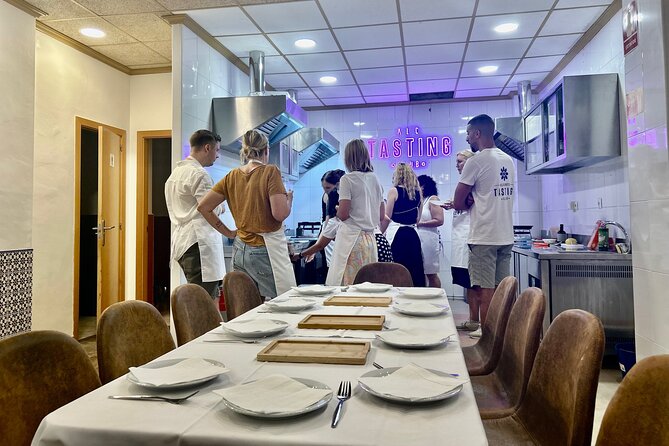
This class also has a “team” feel. You’ll work with the group on prep and cooking, and that makes it easier to follow step-by-step instructions, even if you’re not a confident home cook. The vibe is friendly and focused on getting you to a great result, not showing off.
You can also read our reviews of more tours and experiences in Alicante.

Mercat Central d’Alacant: Buying Paella Ingredients Like a Local
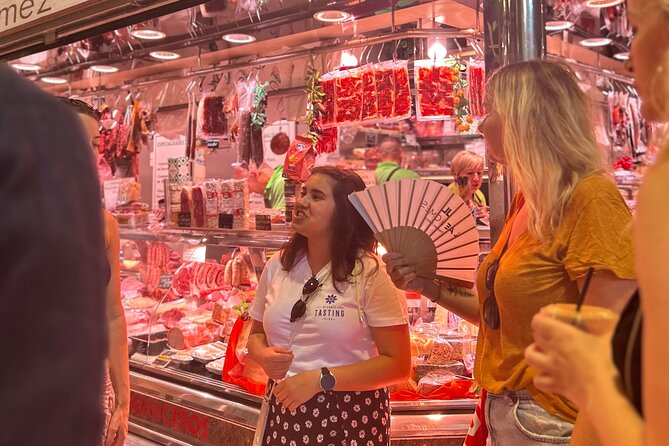
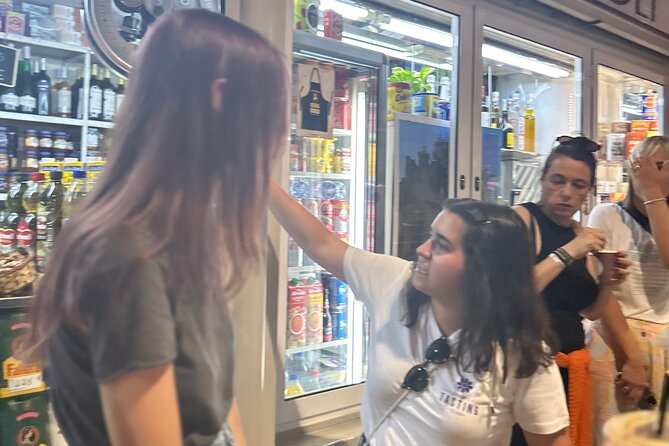
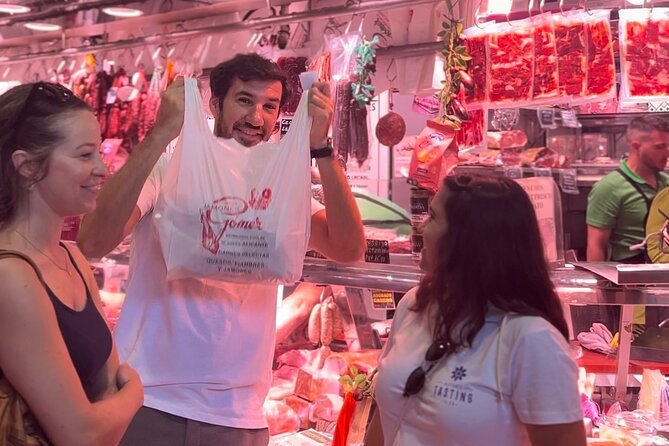
You don’t just stroll through the market for photos. You shop with purpose—picking up the key ingredients needed for your paella class. That matters because paella isn’t one of those dishes where you can swap anything and hope for the best.
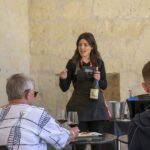
The market visit also gives you context. You’ll hear how Alicante’s market culture connects to the food on your plate, and you’ll get explanations as you move between stalls. Several guides (including Cristina and Marina, based on different classes) are praised for sharing Alicante insights while you’re shopping, which keeps it from feeling like a checklist.
What I like most here is that you’re not stuck staring at a screen. You can ask questions, see ingredients up close, and learn what you’re actually buying. It’s a real skill: when you understand what matters, you can recreate the flavors later—even if you’re shopping in your home country.
One possible drawback is timing. There’s at least one class where the market stop felt a bit compressed because the market was closing, so you may see fewer stalls than you expected. If you’re the type who loves long wandering, you might want to plan a separate self-guided market walk either before or after your class.
From Market to Kitchen: How the Cooking Class Runs
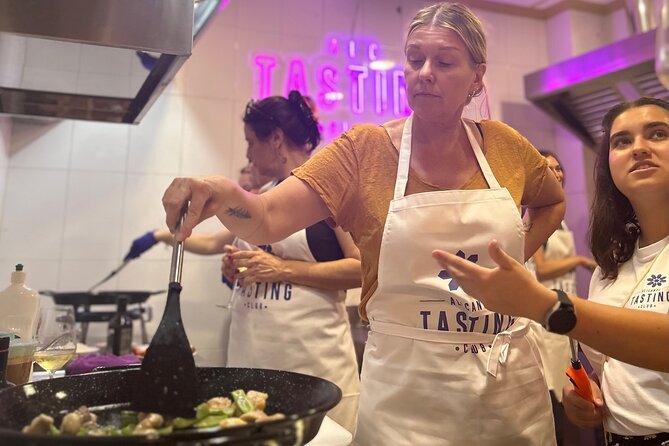
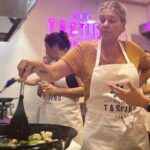
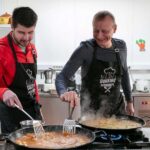
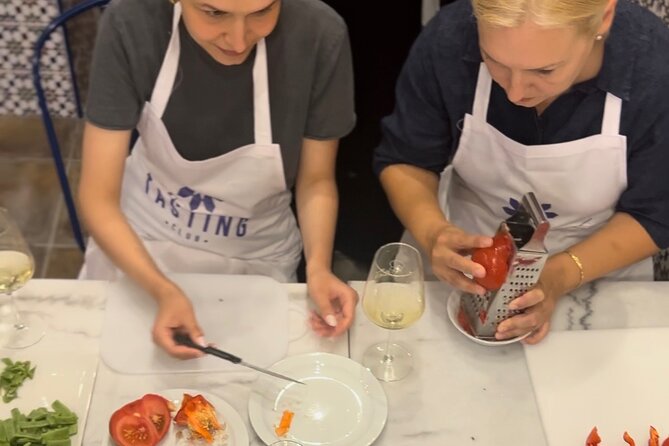
After the shopping, you transition from ingredients to action. You’ll head to the cooking space and start prepping. This is where the experience earns its keep: you’re not just tasting—you’re cutting, cleaning, assembling, and then cooking in teams.
Expect guidance that breaks the process into manageable steps. From what I saw described across classes, the chefs explain why certain ingredients go in when they do, which is a huge help when you try to cook again later. If you’ve ever had paella turn out too dry, bland, or uneven, this is the kind of workflow you want.
Cooking in a group of up to 16 also helps. You can split tasks, watch what your teammates are doing, and get help fast if something doesn’t make sense. Many people mention guides like Andrea and Christina for their energy and patience—so even if you’ve never cooked rice-based dishes before, you’re likely to get along just fine.
Dietary needs are also taken seriously. Meat, seafood, and vegetarian options are available, and the operator says they can accommodate restrictions like vegetarian, vegan, and gluten-free if you indicate your needs at booking. For a food class, that’s a big plus because it prevents you from ending up with a token substitute.
Alicante-Style Paella: What You’ll Learn (and Why It Works)
The star here is paella, but specifically the Alicante rice angle. You’ll learn about Alicante rice dishes—what makes them distinct, and how the cooking method shapes the final bite. This isn’t only theory. You’ll apply the lessons while you cook.
A few themes show up again and again in how people describe the class:
- You learn the importance of getting the ingredients right, not just the recipe name
- You understand how to prep ingredients so they cook properly in the pan
- You follow a timeline for cooking that leads to better texture and flavor
One standout detail from the class atmosphere: there’s often room for curiosity. In some sessions, special ingredients and experiments come up, including squid ink in at least one class that was described as a group favorite. Don’t assume every class will do it, but the point is that the chef approach feels flexible within a structured lesson.
You can also expect multiple paella styles depending on your group. Some classes focus on seafood and chicken, others include veggie paella. Either way, you’ll be part of the process, and you’ll taste what your hands created at the end.
Tapas, Wine, and Sangría: Eating Like You Mean It
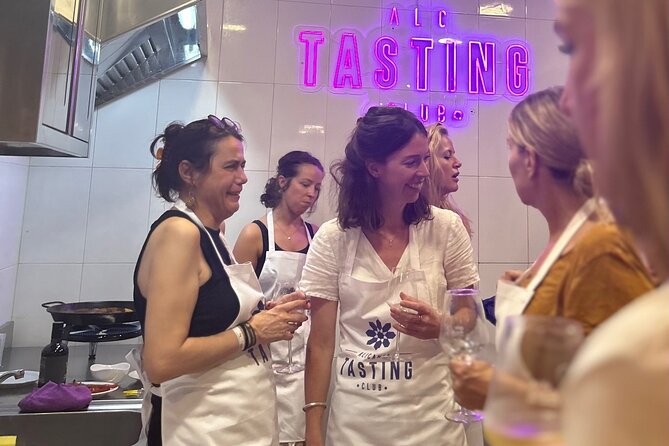
Cooking is only half the fun. The other half is eating—plus drinks that fit the Spanish pattern: small bites while you socialize, then your main meal.
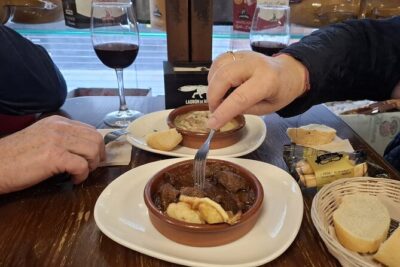
You’ll have a selection of tapas during the experience, and you’ll pair them with local wines and beverages. Sangría also shows up. Several people highlight that the drinks were part of the fun without turning the class into chaos.
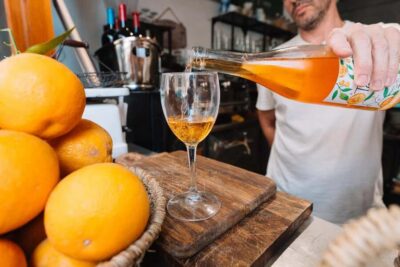
One specific drink story that came up is how a host can make tinto de verano feel a little special with extra ingredients (like a Fanta lemon-lime and red wine mix). I can’t guarantee every guide will do the same exact trick, but it does reflect the style: practical, friendly, and rooted in local habits.
What I like about the tapas component is that it keeps energy up during cooking. Rice and simmering take patience. Having food and drink in the meantime makes the whole process feel more like a shared afternoon than a timed workshop.


The Best Part: Sitting Down to Your Own Paella
Yes, you actually eat the paella you made. And that’s the moment the class is designed to reach.
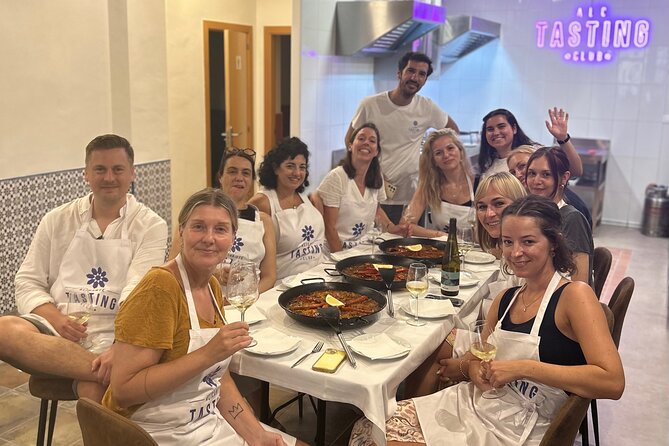
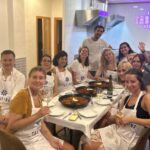
At the end, you share the meal in a relaxed setting with the fellow group. Several comments emphasize that the paella is not just good, but satisfying—people mention eating everything and loving the final result. That’s what you want from a cooking class: proof of concept.
The team setup also matters here. When you cook in portions or in groups, you get a better sense of how flavors balance. It’s easier to understand how the process affects taste when you can compare what your pan did versus what another team did.
If you’re a solo traveler, this is one of those rare cooking experiences that doesn’t feel awkward. You’re working with people, talking while you cook, then eating together. The format naturally creates conversation.
Price and Value: Is $59.28 Worth It?
At $59.28 per person for about 3 hours 30 minutes, this is priced like a mid-range specialty food experience. The value comes from what you get for that price: market shopping, hands-on cooking, tapas, drinks, and recipes to take home.
Here’s the simple math I use when deciding:
- If the class includes only tasting, it’s harder to justify the cost.
- If it includes shopping + active cooking + enough food to feel like a meal, it starts to make sense quickly.
This one crosses that line. You aren’t just getting a guided walk. You buy ingredients, cook paella yourself, and get a full eating moment with tapas and local drinks.
Small group size (max 16) also supports the value. More attention from the chef and guide can make a difference when you’re handling rice, heat, timing, and ingredient prep.
If you’re the type who enjoys food experiences and wants a practical souvenir, recipes alone make it feel more worthwhile. You get instructions to recreate Alicante-style arroz later, which turns the class from entertainment into something usable.
Who Should Book This Alicante Cooking Class
This fits best if you want a hands-on food activity in Alicante that feels local rather than tourist-y. It’s also a smart choice if you’re learning-first, because guides explain both cooking steps and how the ingredients connect to Alicante’s food culture.
I’d especially recommend it if:
- you want to learn the why behind paella techniques, not just the recipe
- you enjoy markets and want that ingredient-shopping piece included
- you’re traveling with friends, or you want a social format as a solo traveler
- you have dietary restrictions and need a class that can handle them with notice
If you’re mainly after a long market wander or free time to roam, you might feel slightly constrained by the class structure. The cooking schedule drives the day.
Should You Book It?
I’d book it if your goal is to leave Alicante knowing how to make a better paella, not just knowing what paella is. The market ingredient step plus the hands-on cooking is a strong combo, and the fact that recipes are included makes it even easier to justify.
Skip it (or pair it with extra free market time) if you’re expecting a slow, leisurely browse through every aisle. And if you hate being in a group while cooking, check your comfort level. Otherwise, this is one of those experiences that turns a meal into a skill you can use again.
If you want a practical way to taste Alicante and bring that taste home, this paella class is a great pick.
FAQ
Where does the tour meet?
The meeting point is Mercat Central d’Alacant, Av. Alfonso El Sabio, nº 10, 03004 Alicante, Spain.
How long is the experience?
The class lasts about 3 hours 30 minutes.
Is it offered in English?
Yes. The tour is offered in English, with an English/Spanish speaking guide.
What’s included with the paella class?
You’ll get market ingredient shopping, a hands-on paella cooking class with a local chef, a selection of traditional tapas, local wines, sangría, and beverages, plus recipes to take home. Meat, seafood, and vegetarian options are available.
Can you accommodate dietary restrictions?
Yes. Dietary restrictions such as vegetarian, vegan, and gluten-free can be accommodated if you indicate your needs at booking.
How big is the group?
The maximum group size is 16 travelers.
What’s the cancellation window?
You can cancel for free up to 24 hours in advance for a full refund. If you cancel less than 24 hours before the experience starts, the amount paid won’t be refunded.